 YAVE
Ipswich Town
The history of Ipswich Town: Ramsey's miracle, the Robson golden age and the UEFA Cup

Ipswich Town were founded on 16 October 1878 as an amateur side, Ipswich A.F.C., merging with Ipswich Rugby Club in 1888 to form Ipswich Town Football Club. The Blues — and, since their 2000–02 Premier League years, affectionately the Tractor Boys — have played at Portman Road since 1884, a ground of around 30,000 that is the largest in East Anglia, and they remain the only fully professional club in Suffolk.
Few clubs of Ipswich's size own a trophy cabinet like this: league champions in 1961–62, in their first ever top-flight season; FA Cup winners in 1978; and UEFA Cup winners in 1981, the peak of the Bobby Robson golden age. Two Ipswich managers, Alf Ramsey and Robson, went on to manage England. The records belong to Ray Crawford, scorer of 218 goals in all competitions, and captain Mick Mills, who made 741 first-team appearances between 1966 and 1982.
Contents
- Amateur Beginnings and the Football League (1878–1938)
- The Third-Tier Apprenticeship and Ramsey's Miracle (1938–1963)
- Decline, then the Robson Golden Age (1963–1982)
- After Robson: Lyall's Return and Burley's Fifth Place (1982–2002)
- The Championship Years, Marcus Evans and League One (2002–2021)
- McKenna and Back-to-Back Promotions (2021–present)
- Honours
- Timeline
- References
Amateur Beginnings and the Football League (1878–1938)

The amateur Town played their first match on 2 November 1878, a 6–1 friendly win over Stoke Wanderers at Broom Hill, collected local silverware — the Suffolk Challenge and Senior Cups — and in 1884 moved to Portman Road, their home ever since. After working through the Norfolk & Suffolk and South East Anglian leagues, Ipswich joined the Southern Amateur League in 1907 and won it four times, in 1921–22, 1929–30, 1932–33 and 1933–34, before becoming founder members of the Eastern Counties League in 1935. In 1936 Ipswich turned professional, joined the Southern League and won it at the first attempt. On 30 May 1938 the club was elected to the Football League, entering the Third Division South; the first League match at Portman Road was a 4–2 win over Southend United that August, before more than 19,000 spectators.
The Third-Tier Apprenticeship and Ramsey's Miracle (1938–1963)
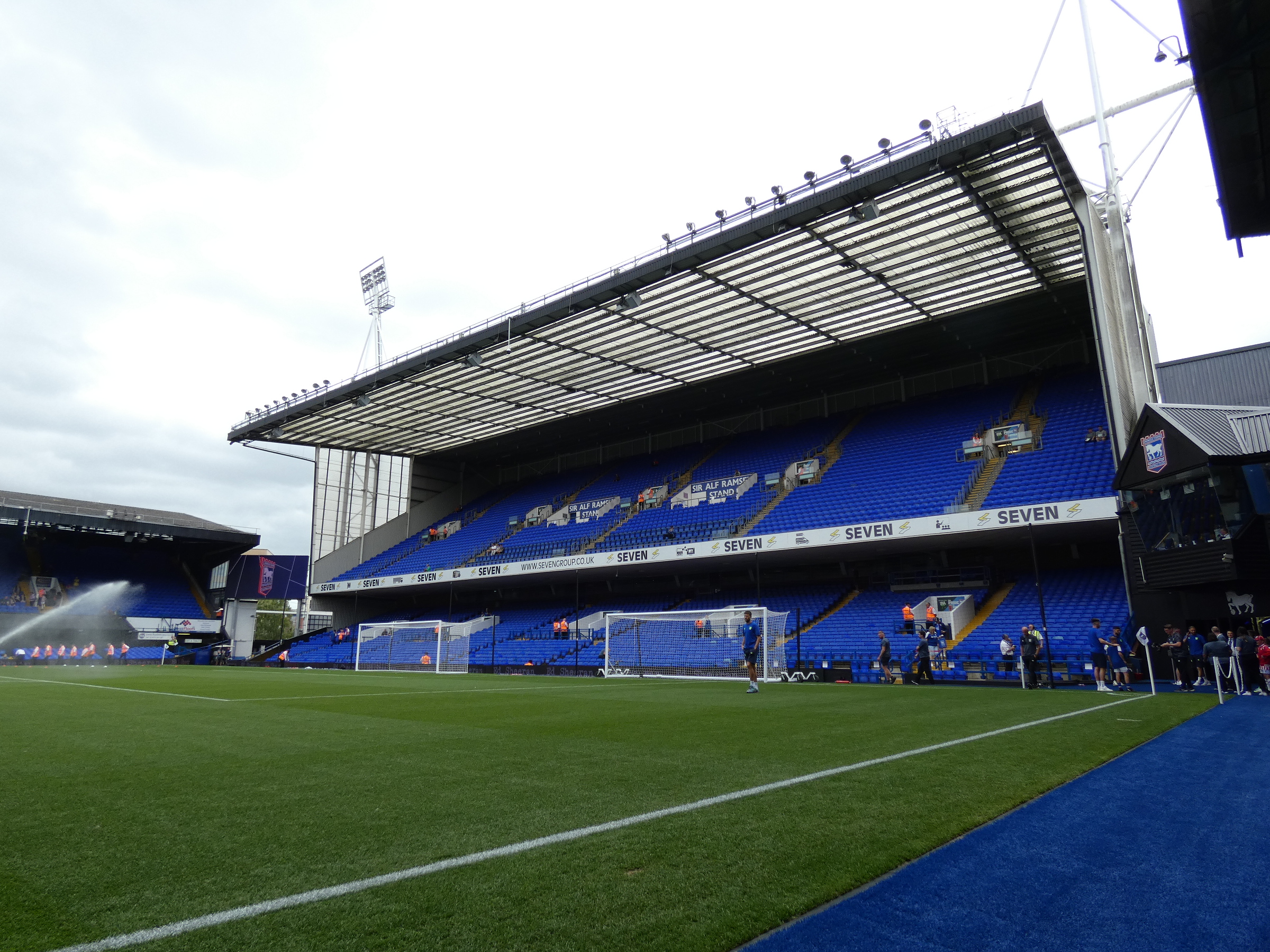
Ipswich spent the war years and beyond in the Third Division South under Scott Duncan, the club's longest-serving manager by time, finally winning the division in 1953–54 — only to be relegated straight back the following season. Alf Ramsey arrived in August 1955. Third Division South champions again in 1956–57, with Ted Phillips scoring a club-record 41 league goals (46 in all competitions), Ipswich established themselves in the Second Division, then won it in 1960–61 behind the strike partnership of Ray Crawford and Phillips. Then came the miracle: in 1961–62, their first ever top-flight season, Ipswich won the First Division title. As champions they entered the European Cup, beating Floriana 14–1 on aggregate before losing to AC Milan. In April 1963 Ramsey left to manage England — and won the World Cup with them in 1966. His statue stands outside Portman Road, and the ground's south stand bears his name.
Decline, then the Robson Golden Age (1963–1982)

Without Ramsey, Ipswich collapsed: relegated in 1964 after conceding 121 league goals, they spent four years in the Second Division before Bill McGarry took them up as champions in 1967–68. McGarry left for Wolves, and Bobby Robson arrived in January 1969. Robson built slowly and surely across 709 matches — a club record: the Texaco Cup in 1973, fourth place and European football, third place and a first FA Cup semi-final in 1974–75. With Mick Mills captaining a side of Kevin Beattie, Terry Butcher, George Burley, Paul Mariner and John Wark — and the Dutch masters Arnold Mühren and Frans Thijssen adding continental flair — Ipswich became a permanent top-six side, and they have never lost a home match in European competition. In 1978 the underdogs outplayed Arsenal at Wembley and won the FA Cup 1–0 through Roger Osborne's 77th-minute goal. In 1980–81 came the near-treble: league runners-up to Aston Villa, FA Cup semi-finalists, and UEFA Cup winners, beating AZ Alkmaar 5–4 on aggregate with Wark scoring 14 goals in the campaign. Runners-up again in 1981–82, Robson left that summer to manage England.
After Robson: Lyall's Return and Burley's Fifth Place (1982–2002)
Robson's assistant Bobby Ferguson could not sustain the golden age: the costly new Pioneer Stand squeezed the budget, Thijssen, Wark and finally Terry Butcher were sold, and Ipswich were relegated in 1986. John Lyall won the Second Division title in 1991–92 and took Town into the first Premier League season — fourth in January 1993, but survival only on the final day in 1994 — before resigning that December. George Burley, a full-back in Robson's great side, could not stop relegation in 1995, which included a Premier League-record 9–0 defeat at Manchester United. Burley rebuilt in the second tier, lost three consecutive play-off semi-finals, then won the 2000 play-off final, 4–2 over Barnsley at Wembley in the last final at the old stadium. In 2000–01 Ipswich finished fifth in the Premier League — Burley was Manager of the Year and Ipswich were back in the UEFA Cup. But the second season collapsed: one win in the first 17 league games, relegation in 2002, and the loss of income pushed the club into administration. Burley was sacked in October 2002.
The Championship Years, Marcus Evans and League One (2002–2021)
Joe Royle took Ipswich out of administration and twice into the play-offs, losing semi-finals to West Ham in 2004 and 2005. In December 2007 businessman Marcus Evans completed his takeover, taking an 87.5% stake and clearing the club's debts. Evans's money never bought promotion: Roy Keane and Paul Jewell failed, Mick McCarthy stabilised the club across six seasons and reached the 2015 play-offs — lost to rivals Norwich City — but finishes sank, and 16th in 2016–17 was the lowest since 1958–59. Paul Hurst lasted less than five months in 2018, the shortest tenure in club history; Paul Lambert could not save the club, and in 2019 Ipswich were relegated to League One — the third tier for the first time since 1957, ending a 63-year stay in the top two divisions. League One began badly, with an 11th-place finish in the curtailed 2019–20 season. On 7 April 2021 the US consortium Gamechanger 20 Ltd bought a majority stake, with Evans becoming a minority shareholder, and that December the club appointed a young Manchester United coach: Kieran McKenna.
McKenna and Back-to-Back Promotions (2021–present)

McKenna, appointed on 20 December 2021 with Town mid-table in League One, transformed the club. After an 11th-place finish in 2021–22, his first full season brought promotion from League One as runners-up in 2022–23 — 98 points and 101 league goals, sealed by a 6–0 rout of Exeter City in April 2023. Then came back-to-back promotions: Championship runners-up in 2023–24 with 96 points and the division's highest goal tally, beating Huddersfield Town 2–0 at Portman Road on 4 May 2024 to end a 22-year absence from the Premier League — only the fifth club to win back-to-back promotions into the top flight in the Premier League era. The return proved brutally hard: Ipswich spent most of 2024–25 in the relegation zone and went down on 26 April 2025 after a 3–0 defeat at Newcastle United, finishing with a club-record low 22 points. But the club Ramsey and Robson built had shown, once again, how quickly it can climb.
Honours
| Trophy | Titles | Years |
|---|---|---|
| First Division (league title) | 1 | 1961–62 (runners-up 1980–81, 1981–82) |
| FA Cup | 1 | 1977–78 |
| UEFA Cup | 1 | 1980–81 |
| League Cup | 0 | Never won — semi-finalists, but never finalists |
| Second Division (second tier) | 3 | 1960–61, 1967–68, 1991–92 |
| Third Division South (third tier) | 2 | 1953–54, 1956–57 |
| Texaco Cup | 1 | 1972–73 |
Timeline
- 1878 — Ipswich A.F.C. founded as an amateur club (16 October); first match, a 6–1 friendly win over Stoke Wanderers at Broom Hill, follows on 2 November.
- 1884 — The club moves to Portman Road, its home ever since; in 1888 it merges with Ipswich Rugby Club to become Ipswich Town Football Club.
- 1936–38 — Ipswich turn professional (1936), win the Southern League at the first attempt (1936–37) and are elected to the Football League on 30 May 1938.
- 1953–54 / 1956–57 — Third Division South champions twice; Alf Ramsey (appointed August 1955) masterminds the second title, with Ted Phillips scoring a record 41 league goals in 1956–57.
- 1961–62 — Second Division champions in 1960–61, Ipswich win the First Division title in their first ever top-flight season under Ramsey, who leaves for England in April 1963.
- 1967–68 — Bill McGarry's side win the Second Division; Bobby Robson becomes manager in January 1969 and begins a 13-year, 709-match reign.
- 1978 — FA Cup winners: Ipswich beat Arsenal 1–0 at Wembley (Roger Osborne, 77') — the club's first major cup, in their first FA Cup final.
- 1981 — UEFA Cup winners: AZ Alkmaar beaten 5–4 on aggregate (3–0 at Portman Road, 2–4 in Amsterdam); John Wark scores 14 goals in the campaign. Ipswich also finish league runners-up in 1980–81 and 1981–82 and reach the 1981 FA Cup semi-final.
- 1991–92 / 2000–01 — John Lyall's Second Division champions enter the first Premier League season; a decade on, George Burley's side win the 2000 play-off final (Barnsley 4–2) and finish 5th in the Premier League in 2000–01 — before relegation and administration in 2002.
- 2019 — After 17 straight Championship seasons under Marcus Evans's ownership, Ipswich are relegated to League One — the third tier for the first time since 1957.
- 2021 — Gamechanger 20 Ltd completes its takeover (7 April); Kieran McKenna is appointed manager on 20 December with Town mid-table in League One.
- 2023–24 — Back-to-back promotions: League One runners-up in 2022–23 (98 points, 101 goals), then Championship runners-up in 2023–24 — Premier League football returns to Portman Road after 22 years; relegation follows in 2024–25 (confirmed 26 April 2025).
References
- Wikipedia — "Ipswich Town F.C." (history, honours and records).
- Wikipedia — "List of Ipswich Town F.C. records and statistics" and "Portman Road".
- UEFA.com — "1980/81: Ipswich thankful for Thijssen" (the 1981 UEFA Cup final).
- Pride of Anglia — Ipswich Town statistics and Hall of Fame pages.
- Wikimedia Commons — file pages for the photographs used.
Image source: Wikimedia Commons.


