 YAVE
Juventus
The Old Lady of Turin — 36 Scudetti, the Agnelli century and the fall and rise of Italy's most decorated club
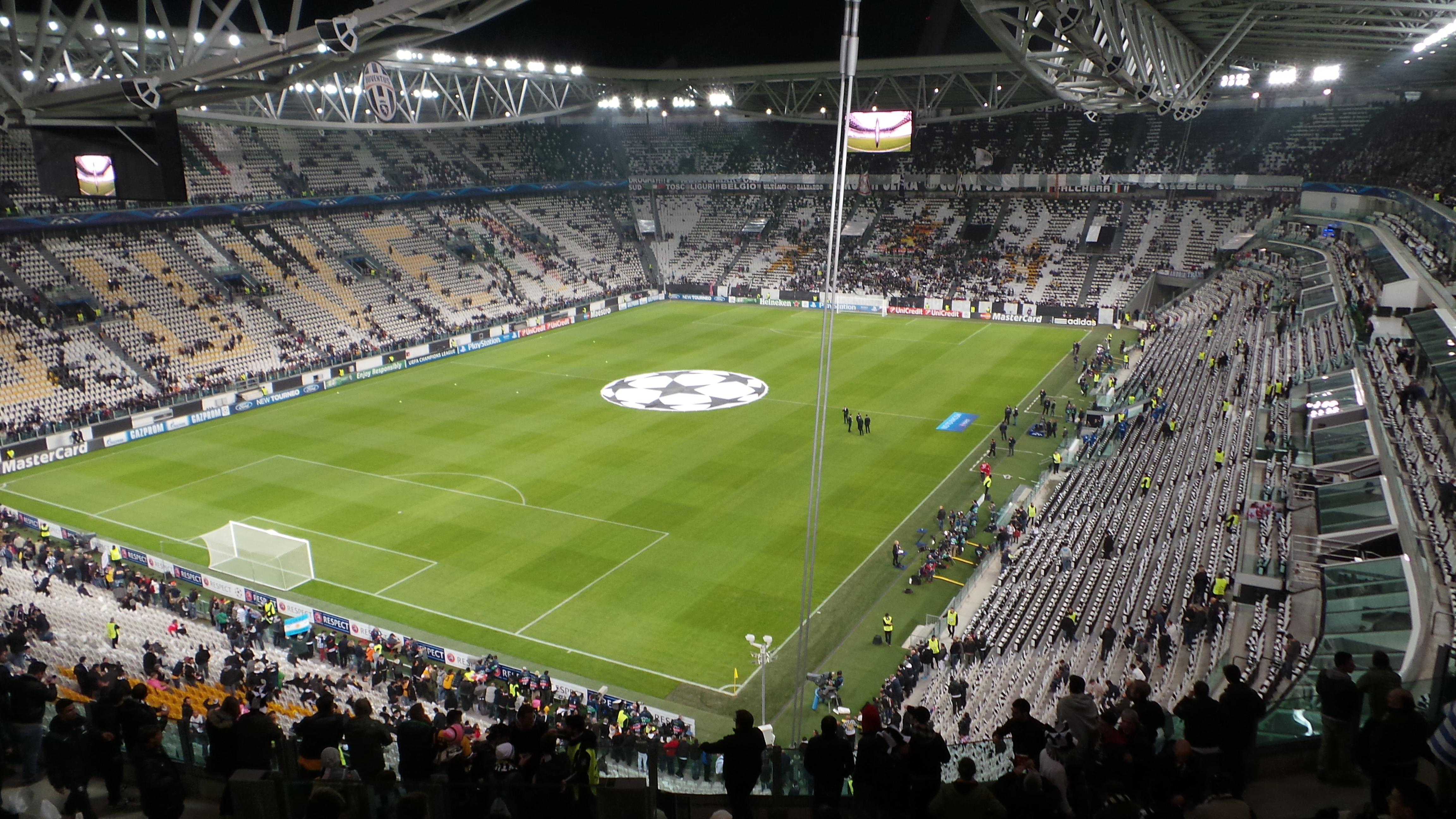
Juventus Football Club — La Vecchia Signora, the Old Lady — was founded in Turin on 1 November 1897 by schoolboys of the Massimo d'Azeglio Lyceum and has become Italy's most decorated club: 36 official league titles, 15 Coppe Italia, two European Cups and a clean sweep of every European trophy there was to win. Controlled by the Agnelli family almost continuously since 1923, the Bianconeri have spent all but one season of their history in the top flight — that single exception, the Calciopoli relegation of 2006, imposed rather than suffered. They play at the club-owned Juventus Stadium, capacity 41,689, which opened in 2011 and launched a record run of nine consecutive league titles.
Contents
- Schoolboys, pink shirts and the first Scudetto (1897–1923)
- The Agnelli era and the Quinquennio (1923–1957)
- The Trio Magico and the first star (1957–1974)
- Trapattoni's European clean sweep (1974–1986)
- Lippi, the second European Cup and Calciopoli (1986–2006)
- Serie B, the new stadium and the nine-title dynasty (2006–2026)
- Honours
- Timeline
- References
Schoolboys, pink shirts and the first Scudetto (1897–1923)
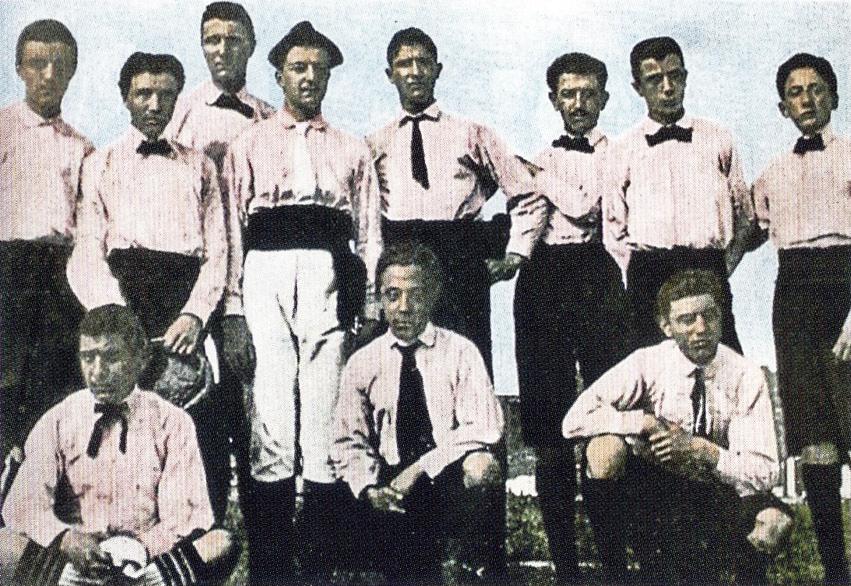
Juventus began on 1 November 1897 as Sport-Club Juventus, a general sports club founded by pupils of Turin's Massimo d'Azeglio Lyceum, among them the brothers Eugenio and Enrico Canfari. Renamed Foot-Ball Club Juventus in 1899, the club entered the Italian championship in 1900, losing its first match 1–0 to Torinese. The first team wore pink shirts with a black tie; in the early 1900s those gave way to black-and-white stripes inspired by Notts County, after club member John Savage arranged a shipment from Nottingham — the stripes were in place by the first title season. Stabilised by businessman Marco Ajmone-Marsan, Juventus won their first Italian championship in 1905 at the Velodromo Umberto I. A year later, disagreement over moving the club out of Turin drove president Alfred Dick and several players to break away and found FBC Torino — the origin of the Derby della Mole. Juventus rebuilt, survived the First World War, and waited for the man who would define them.
The Agnelli era and the Quinquennio (1923–1957)
In 1923 Edoardo Agnelli, vice-president of FIAT, became president — the start of an Agnelli control that has lasted, almost unbroken, ever since and continues today through the family's holding company Exor. A second title followed in 1925–26, and in 1933 Juventus moved into the new Stadio Comunale. Under coach Carlo Carcano came the Quinquennio d'oro: five consecutive league titles from 1930–31 to 1934–35, built on the 1934 World Cup winners Raimundo Orsi, Luigi Bertolini, Giovanni Ferrari and Luis Monti, with Gianpiero Combi in goal and Felice Borel II scoring freely. Juventus had become Italy's first great professional club. The first Coppe Italia arrived in 1938 and 1942, and after the war the titles of 1949–50 and 1951–52 were built around Giampiero Boniperti, the young forward who would become the club's record scorer and, later, its president.
The Trio Magico and the first star (1957–1974)

In 1957 Juventus signed the Welsh centre-forward John Charles and the Argentine-born Omar Sívori to play alongside Boniperti — the Trio Magico. They won the title in 1957–58, the club's tenth, and Juventus were the first Italian club to wear a star above the badge for it. The league-and-cup double followed in 1959–60, the club's first, and another title in 1960–61, the season Sívori scored six goals in one match against Inter, a 9–1 win that remains a joint Serie A record. Boniperti retired in 1961 as the club's record scorer — 179 goals in the standard competitive-matches table, 178 of them in the league championship — and rose to the presidency. The sixties were leaner: Heriberto Herrera's side won the title in 1966–67, but the decade ended with a first European Cup final, lost 1–0 to Ajax in Belgrade in 1973.
Trapattoni's European clean sweep (1974–1986)
Giovanni Trapattoni, appointed in 1976, built the most complete side in the club's history around Gaetano Scirea, Dino Zoff, Roberto Bettega and Paolo Rossi. In ten years he won six league titles — including the 20th, and a second star, in 1981–82 — two Coppe Italia, the UEFA Cup of 1977 (the club's first European trophy, won against Athletic Bilbao on away goals), the Cup Winners' Cup and European Super Cup of 1984, and the European Cup itself. That final, against Liverpool at the Heysel Stadium in Brussels on 29 May 1985, can never be told as a simple triumph. Before kick-off, a charge by Liverpool supporters into the Juventus section and the collapse of a retaining wall in the dilapidated stadium killed 39 people — most of them Italian and Juventus supporters — and injured around 600. The authorities decided the match should be played to avoid further disorder; Juventus won 1–0 with a Michel Platini penalty, for a foul on Zbigniew Boniek. English clubs were banned from European competition for five years. The Intercontinental Cup followed in December 1985, making Juventus the first club to win every then-existing official confederation trophy. Platini, the side's artist, won three consecutive Ballon d'Or awards from 1983 to 1985.
Lippi, the second European Cup and Calciopoli (1986–2006)

After the move to the unloved Stadio delle Alpi in 1990 — a vast municipal bowl where crowds averaged a third of capacity — and UEFA Cup wins in 1990 under Dino Zoff and 1993 under the returning Trapattoni, Marcello Lippi took over in 1994. His side won the league-and-cup double at the first attempt, then the Champions League in Rome on 22 May 1996: 1–1 with Ajax, Fabrizio Ravanelli's goal answered by Jari Litmanen, and a 4–2 shoot-out win with Vladimir Jugović scoring the decisive kick. The Super Cup and Intercontinental Cup followed the same year. Lippi's teams reached three straight European finals but lost in 1997 and 1998, and his second spell brought titles in 2002 and 2003 and another lost final, to Milan on penalties. Then came the collapse. In 2006 the Calciopoli scandal exposed general manager Luciano Moggi's and chief executive Antonio Giraudo's influence over referee appointments. Juventus were relegated to Serie B — the only relegation in the club's history — initially with a 30-point deduction, reduced on appeal to 17 and finally, by CONI arbitration, to 9. The title won on the pitch in 2004–05 was revoked and left unassigned; the 2005–06 title was revoked and assigned to Inter Milan. Juventus count 38 titles "won on the pitch" (sul campo); the official FIGC total is 36.
Serie B, the new stadium and the nine-title dynasty (2006–2026)

The loyalists stayed: Alessandro Del Piero, Gianluigi Buffon, Pavel Nedvěd, David Trezeguet and Mauro Camoranesi won Serie B at the first attempt under Didier Deschamps, finishing on 85 points despite the deduction; Del Piero was the division's top scorer with 20 league goals. He retired in 2012 as the club's record appearance holder and scorer — 705 appearances and 290 goals in all competitions, 478 appearances and 188 goals of them in Serie A. Buffon, second on the appearance list with 685, holds the all-time Serie A appearance record of 657 — for Parma and Juventus combined. In September 2011 the Juventus Stadium opened on the Delle Alpi site, the first modern club-owned stadium in Italy, and under president Andrea Agnelli and coach Antonio Conte the Scudetto returned at once — unbeaten in 2011–12, then a record 102 points in 2013–14, the official 30th title and the third star. Massimiliano Allegri added five more titles, four straight league-and-cup doubles and the lost Champions League finals of 2015 and 2017; Cristiano Ronaldo, signed in 2018 for a fee reported at around €100 million, scored 101 goals in three seasons; Maurizio Sarri completed a record nine consecutive titles in 2019–20. The run ended the next season. In November 2022 Andrea Agnelli's board resigned amid financial investigations; the settled outcome of the capital-gains case was a final 10-point deduction in May 2023, a 7th-place finish, a plea-bargained €718,240 fine and UEFA's exclusion of the club from the 2023–24 Conference League. The 15th Coppa Italia came in May 2024. Juventus closed the 2025–26 season in sixth place under Luciano Spalletti — still Italy's most decorated club, with 36 official league titles, and still waiting for a first Scudetto since 2020.
Honours
| Competition | Titles | Years / best |
|---|---|---|
| Italian championship / Serie A | 36 | 1905, 1925–26, 1930–31, 1931–32, 1932–33, 1933–34, 1934–35, 1949–50, 1951–52, 1957–58, 1959–60, 1960–61, 1966–67, 1971–72, 1972–73, 1974–75, 1976–77, 1977–78, 1980–81, 1981–82, 1983–84, 1985–86, 1994–95, 1996–97, 1997–98, 2001–02, 2002–03, 2011–12, 2012–13, 2013–14, 2014–15, 2015–16, 2016–17, 2017–18, 2018–19, 2019–20 (the 2004–05 title was revoked and left unassigned; the 2005–06 title was revoked and assigned to Inter) |
| Coppa Italia | 15 | 1937–38, 1941–42, 1958–59, 1959–60, 1964–65, 1978–79, 1982–83, 1989–90, 1994–95, 2014–15, 2015–16, 2016–17, 2017–18, 2020–21, 2023–24 |
| Supercoppa Italiana | 9 | 1995, 1997, 2002, 2003, 2012, 2013, 2015, 2018, 2020 |
| European Cup / Champions League | 2 | 1985, 1996; runners-up seven times (1973, 1983, 1997, 1998, 2003, 2015, 2017) |
| Cup Winners' Cup / UEFA Cup | 1 / 3 | 1984; 1977, 1990, 1993 |
| European Super Cup / Intercontinental Cup | 2 / 2 | 1984, 1996; 1985, 1996 — 71 official titles in all (60 national, 11 international) |
Timeline
- 1 November 1897 — Sport-Club Juventus is founded in Turin by Massimo d'Azeglio Lyceum pupils, including Eugenio and Enrico Canfari.
- 1899 — The club is renamed Foot-Ball Club Juventus.
- 11 March 1900 — First championship match: a 1–0 defeat to Torinese.
- 1905 — First Italian championship, won at the Velodromo Umberto I.
- 1906 — President Alfred Dick and several players break away to found FBC Torino; the Derby della Mole is born.
- 1923 — Edoardo Agnelli (FIAT) becomes president; Agnelli-family control begins.
- 1925–26 — Second league title (final won v Alba Roma).
- 1930–31 to 1934–35 — The Quinquennio d'oro: five consecutive league titles under Carlo Carcano.
- 1933 — Juventus move into the new Stadio Comunale (then Stadio Mussolini).
- 1937–38 — First Coppa Italia.
- 1949–50 / 1951–52 — Post-war titles around Giampiero Boniperti.
- 1957–58 — The 10th league title: Juventus are the first Italian club to wear a star.
- 1959–60 — First league-and-cup double (Boniperti, Charles, Sívori).
- 1961 — Boniperti retires as the club's record scorer.
- 1966–67 — League title under Heriberto Herrera.
- 30 May 1973 — European Cup final lost 0–1 to Ajax in Belgrade.
- 18 May 1977 — First European trophy: the UEFA Cup, won against Athletic Bilbao on away goals.
- 1981–82 — The 20th league title: a second star.
- 16 May 1984 — Cup Winners' Cup won (2–1 v FC Porto, Basel); the European Super Cup follows (v Liverpool).
- 29 May 1985 — The Heysel disaster: 39 people die before the European Cup final in Brussels; the match is played and Juventus beat Liverpool 1–0 (Platini penalty). English clubs are banned from Europe for five years.
- 8 December 1985 — Intercontinental Cup won against Argentinos Juniors on penalties in Tokyo — Juventus have now won every existing confederation trophy.
- 1990 — Juventus move to the Stadio delle Alpi for the World Cup and win the UEFA Cup (v Fiorentina) under Dino Zoff; Roberto Baggio signs for a world-record fee.
- 1993 — Third UEFA Cup (v Borussia Dortmund) under Trapattoni.
- 1994–95 — Lippi's first season: league-and-cup double.
- 22 May 1996 — Second European Cup/Champions League: 1–1 v Ajax in Rome, won 4–2 on penalties; the UEFA Super Cup and Intercontinental Cup follow the same year.
- 1997 / 1998 / 2003 — Champions League finals lost to Borussia Dortmund, Real Madrid and AC Milan.
- 2001–02 / 2002–03 — Back-to-back titles under the returning Lippi; Buffon and Nedvěd (2001) at the core.
- May 2006 — Calciopoli breaks; the Juventus board resigns.
- July 2006 — Juventus are relegated to Serie B for the first time, with a points deduction finally settled at 9; the 2004–05 title is revoked and left unassigned, the 2005–06 title revoked and assigned to Inter.
- 2006–07 — Serie B champions at the first attempt; Del Piero finishes as the division's top scorer.
- 8 September 2011 — The Juventus Stadium opens (1–1 friendly v Notts County) on the Delle Alpi site.
- 2011–12 — The Scudetto returns, won unbeaten under Antonio Conte.
- 2013–14 — The official 30th title (third star) with a record 102 points.
- 2015 / 2017 — Champions League finals lost to Barcelona and Real Madrid; four consecutive league-and-cup doubles 2015–2018 under Allegri.
- July 2018 — Cristiano Ronaldo signs from Real Madrid for a fee reported at around €100 million.
- 2019–20 — A record ninth consecutive Scudetto (Sarri) — the run ends the following season.
- 19 May 2021 — The 14th Coppa Italia (v Atalanta) under Pirlo.
- 28 November 2022 — President Andrea Agnelli and the whole board resign amid the Prisma investigations.
- 22 May 2023 — The final, settled sanction in the capital-gains case: a 10-point deduction; Juventus finish 7th. A plea bargain (€718,240 fine) closes the salary case on 30 May; UEFA excludes the club from the 2023–24 Conference League on 28 July.
- 15 May 2024 — The 15th Coppa Italia (1–0 v Atalanta); Allegri is dismissed two days later.
- 23 March 2025 — Thiago Motta is sacked; Igor Tudor takes over and secures 4th place on the final day (25 May 2025).
- 30 October 2025 — Luciano Spalletti replaces the dismissed Tudor.
- 24 May 2026 — The 2025–26 season ends with Juventus 6th in Serie A.
References
- Juventus FC — club history, honours and stadium, English and Italian Wikipedia (cross-checked); Juventus Stadium, English Wikipedia (capacity 41,689; opened 8 September 2011 v Notts County); List of Juventus FC records and statistics (36 league titles; 71 official titles; the appearances and goalscorers tables).
- Guinness World Records — Buffon's 657 Serie A appearances (Parma and Juventus combined); UEFA.com — the 1984/85 and 1995/96 final features and the Heysel retrospective (39 deaths; the decision to play; the five-year ban on English clubs).
- Calciopoli trials, English Wikipedia (the 30 → 17 → 9 deduction sequence; the 2004–05 title left unassigned; the 2005–06 title assigned to Inter, 26 July 2006); AP and the Irish Times, 28 July 2023 (the UEFA Conference League exclusion; the €718,240 FIGC plea-bargain fine).
Image source: Wikimedia Commons.


