 YAVE
K League 1
Asia's First Professional League and Its Twelve Asian Crowns
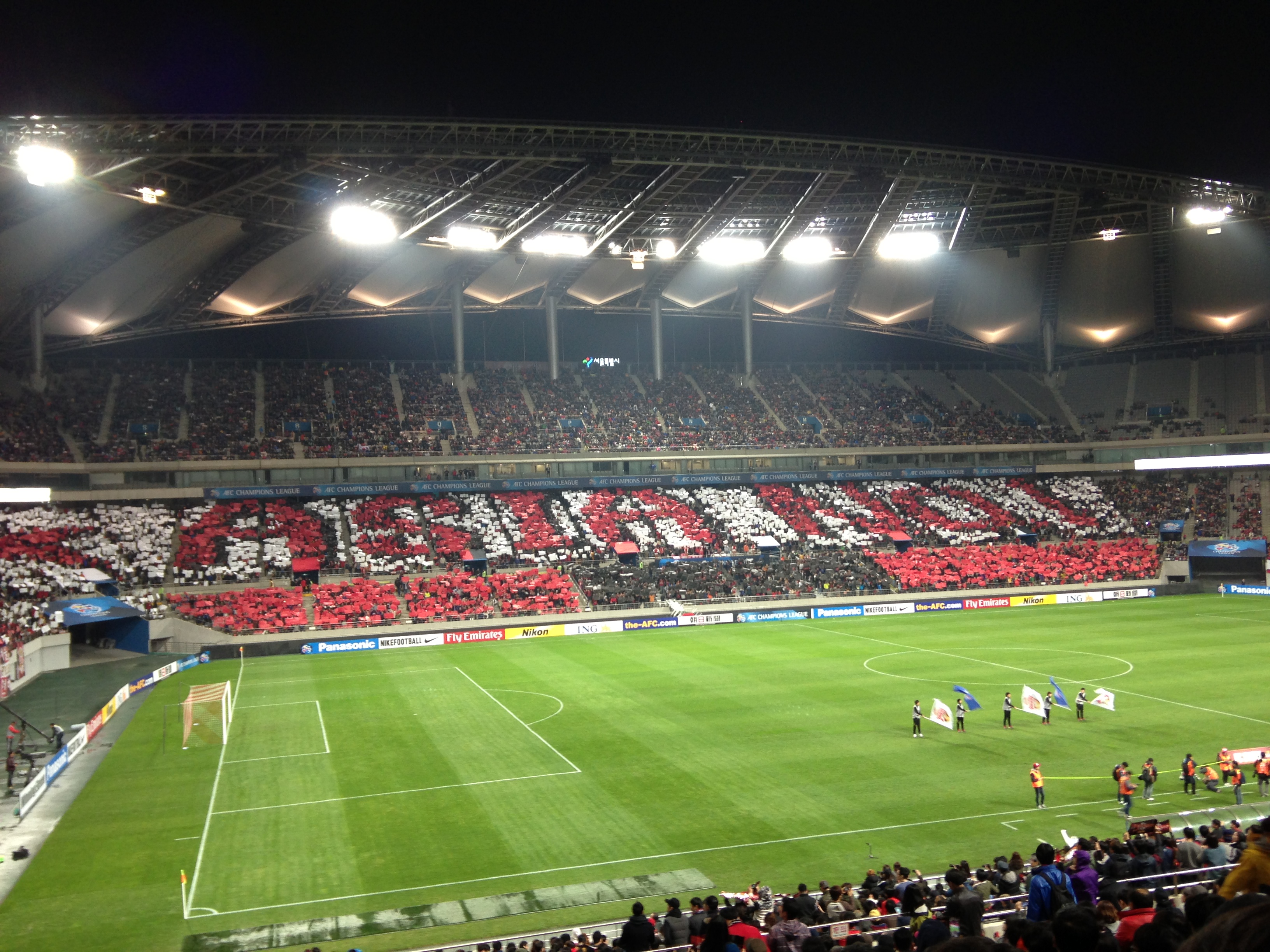
The K League 1 is the top division of football in South Korea — and a genuine pioneer: launched in 1983, it was Asia's first professional football league. Korean clubs have since won a record twelve AFC Champions League titles, more than any other country.
Contents
- History and key facts
- League system
- Stats and records
- Audience and stadiums
- Players and top scorers
- Timeline
- References
History and key facts
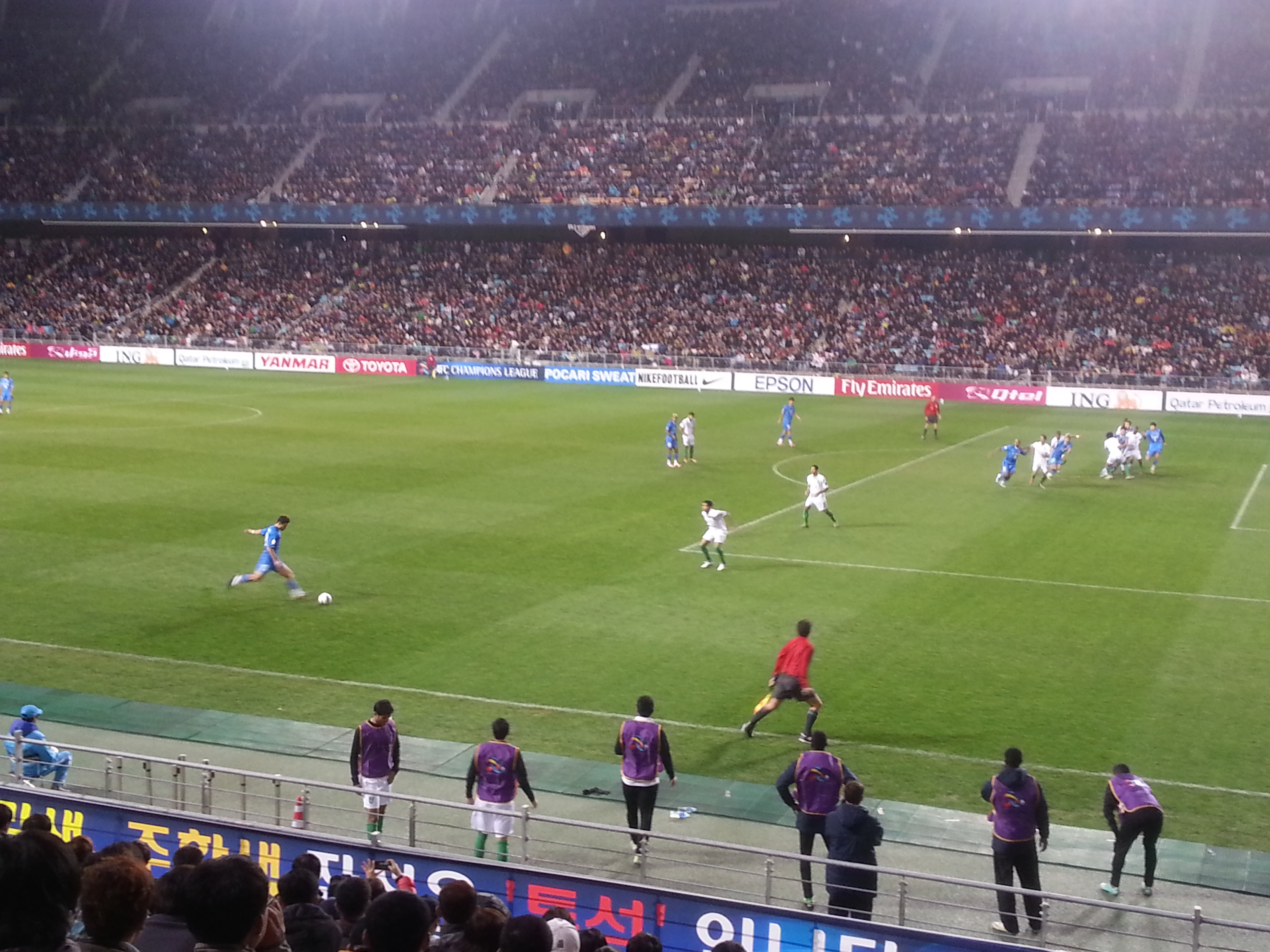
The Korean Super League began in 1983 with five clubs — Hallelujah FC, who won the first title, Yukong Elephants, POSCO (today's Pohang Steelers), Daewoo Royals and Kookmin Bank. It was an era of company teams owned by Korea's industrial giants; a full home-and-away system and fully professional status arrived in 1987, and clubs gradually adopted home-city identities.
Pohang Steelers became Korea's kings of Asia, winning three Asian titles (1996–97, 1997–98 and the 2009 AFC Champions League). The citizen-club movement began with community-owned Daejeon Citizen in 1997, and the 2002 World Cup left ten stadiums that K League clubs still occupy. Jeonbuk Hyundai Motors dominated the modern era — ten titles, including five straight from 2017 — but their reign carries a famous scar: in 2016 a club scout was convicted of bribing referees, Jeonbuk were docked nine points and lost the title on the final day, then won the AFC Champions League anyway and were barred from defending it. Ulsan HD won the Champions League in 2012 and 2020 — the only club to win it twice unbeaten — and completed a league three-peat in 2022–24. FC Seoul's 2026 title, their seventh, ended nine years in which only Jeonbuk and Ulsan had won the league.
League system
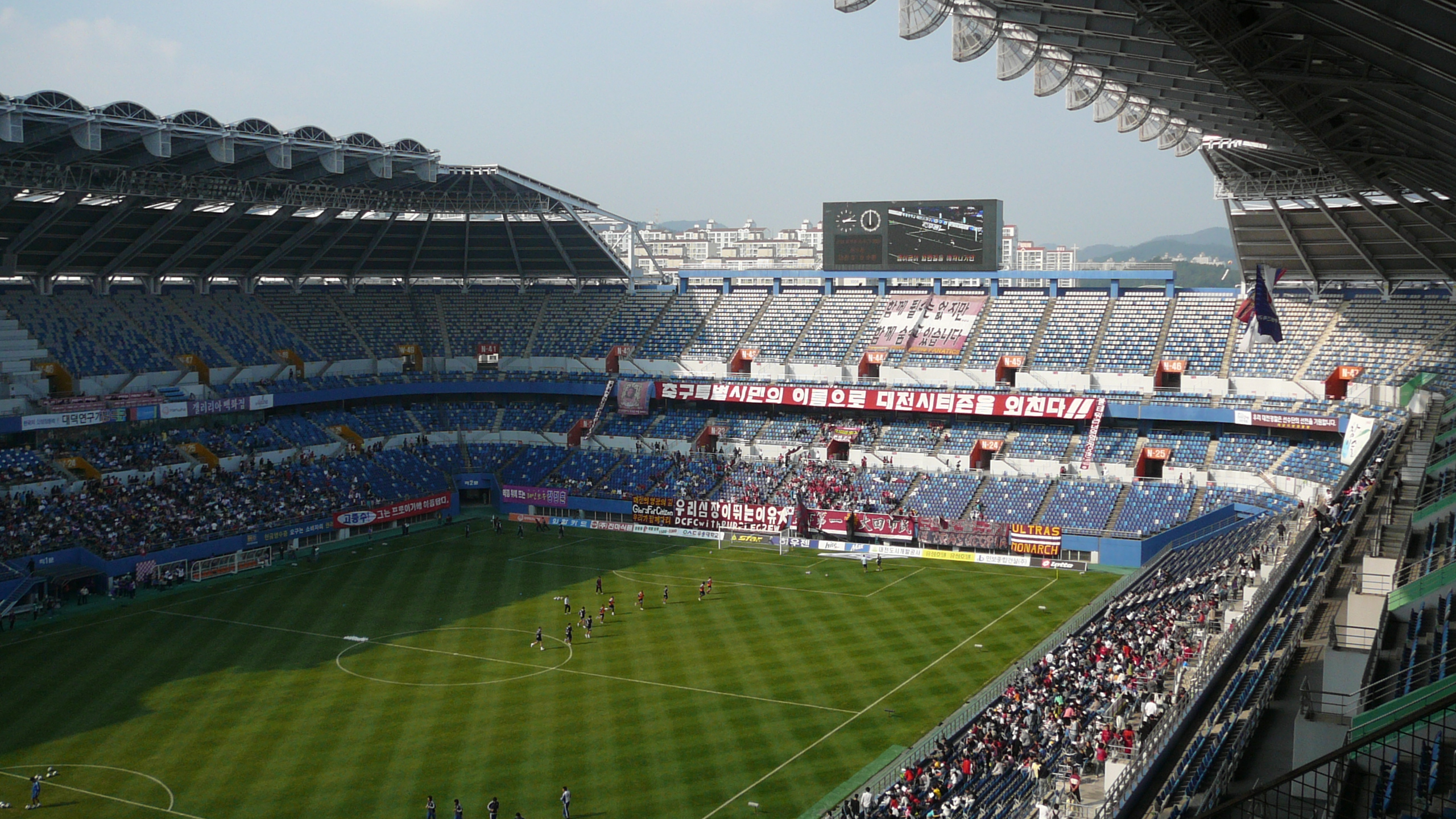
K League 1 has 12 clubs. Each plays the others three times (33 rounds), then the table splits into Final A (top six) and Final B (bottom six) for five more rounds — 38 matches in all. The bottom club is relegated automatically, and the 10th and 11th enter promotion–relegation play-offs against K League 2 clubs. The league's strangest club is Gimcheon Sangmu, the armed forces team: its players are professionals completing compulsory military service, it cannot sign foreigners and is barred from AFC competitions — yet it finished third in 2025, so its Asian place passed to fourth-placed Pohang.
Stats and records
Most titles (professional era)
| Club | Titles |
|---|---|
| Jeonbuk Hyundai Motors | 10 |
| FC Seoul | 7 |
| Seongnam Ilhwa Chunma (now Seongnam FC) | 7 |
| Ulsan HD | 5 |
| Pohang Steelers | 5 |
| Suwon Samsung Bluewings | 4 |
Pohang's total rises to eight if the semi-professional era before 1983 is included; the table counts the professional era only.
Most seasons in the top flight
| Club | Seasons |
|---|---|
| Pohang Steelers | 44 |
| FC Seoul | 43 |
| Ulsan HD | 43 |
| Jeju SK | 43 |
| Jeonbuk Hyundai Motors | 32 |
Figures for current clubs at the start of the 2026 season. Pohang have been ever-present since 1983 and have never been relegated.
Audience and stadiums

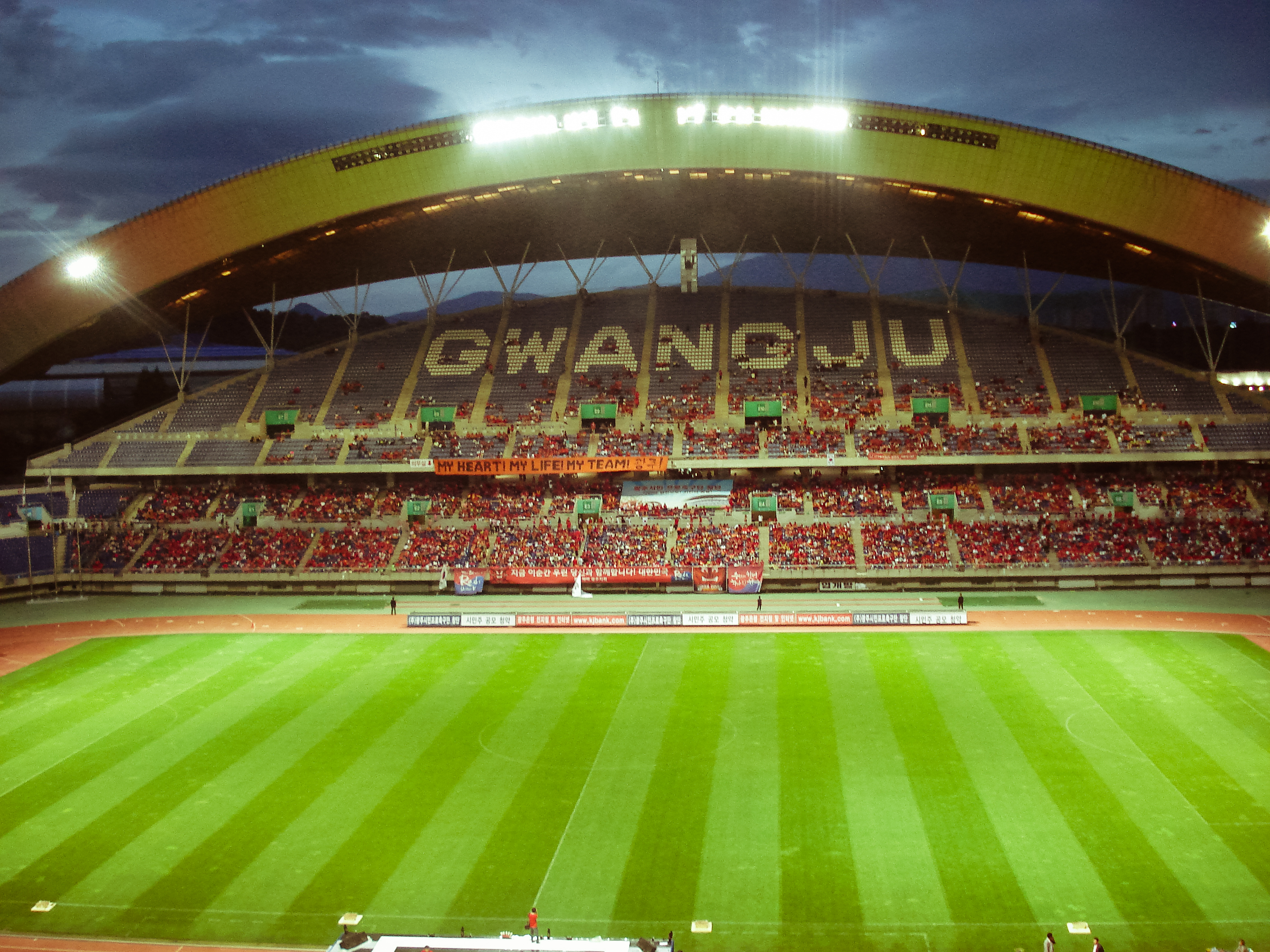
FC Seoul are the best-supported club, averaging over 23,000 in 2025, with Jeonbuk next. Most of the league's big grounds are 2002 World Cup stadiums still in weekly use.
| Stadium | Club | Capacity |
|---|---|---|
| Seoul World Cup Stadium | FC Seoul | 66,704 |
| Daejeon World Cup Stadium | Daejeon Hana Citizen | 40,535 |
| Gwangju World Cup Stadium | Gwangju FC | 40,245 |
| Ulsan Munsu Football Stadium | Ulsan HD | 37,897 |
| Jeonju World Cup Stadium | Jeonbuk Hyundai Motors | 34,207 |
Players and top scorers
Lee Dong-gook, Jeonbuk's talisman, retired in 2020 with four MVP awards and the league's scoring record. By the K League's official statistical policy, the all-time table counts goals across K League 1, K League 2 and cup competitions; the K League 1-only figure is shown alongside.
| Player | Goals (all K League competitions) | K League 1 only |
|---|---|---|
| Lee Dong-gook | 228 | 213 |
| Dejan Damjanović | 198 | 184 |
| Joo Min-kyu | 158 | 106 |
| Kim Shin-wook | 132 | 116 |
| Kim Eun-jung | 123 | 92 |
Montenegrin striker Dejan Damjanović is the highest-scoring foreigner in league history. Goalkeeper Kim Byung-ji holds the appearance record with 708 games.
Timeline
- 1983 — The Korean Super League kicks off as Asia's first professional league; Hallelujah FC win the first title.
- 1987 — A full home-and-away system arrives and the league becomes fully professional.
- 2002 — The World Cup leaves ten stadiums that become K League homes; the citizen-club movement spreads.
- 2009 — Pohang Steelers win their third Asian title, a record for a Korean club.
- 2013 — The K League splits into two divisions, starting the modern promotion and relegation era.
- 2016 — Jeonbuk are docked nine points over referee bribery, lose the title on the final day, then win the AFC Champions League and are barred from defending it.
References
- Wikipedia — K League 1; List of South Korean football champions; K League records and statistics; List of football stadiums in South Korea
- Korea Times; Yonhap News Agency; Korea JoongAng Daily
- AFC — Ulsan's Champions League wins; K League Data Portal
Image source: Wikimedia Commons.


