 YAVE
Wigan Athletic
The Latics' Story — 34 Failed Elections, Dave Whelan and the 2013 FA Cup

Wigan Athletic Football Club were formed in 1932 after the collapse of Wigan Borough, the fifth attempt to create a stable professional club in the town. Nicknamed the Latics, they played at Springfield Park until 1999 and now play at the Brick Community Stadium (opened in 1999 as the JJB Stadium, renamed the DW Stadium in 2009 and the Brick Community Stadium in May 2024), capacity 25,138.
Wigan's only major trophy is the FA Cup, won in 2013 — three days before they were relegated from the Premier League, making them the first club to win the FA Cup and be relegated in the same season. Harry Lyon is Wigan Athletic's all-time record goalscorer, with 273 goals in all competitions between 1962 and 1970, including a club-record 66 goals in the 1964–65 season; Andy Liddell holds the club record for Football League goals, with 70 league goals (1998–2004). Ian Gillibrand holds the club appearance record, with 661 first-team appearances (1968–1979); Kevin Langley made a club-record 317 Football League appearances.
Contents
- Non-League Foundations and the Long Wait (1932–1978)
- Early Football League Years (1978–1995)
- The Whelan Revolution and the Climb (1995–2005)
- Premier League Years and FA Cup Glory (2005–2013)
- Europe, Yo-Yo Years and the End of the Whelan Era (2013–2020)
- Administration Aftermath and the Danson Rebuild (2020–present)
- Honours
- Timeline
- References
Non-League Foundations and the Long Wait (1932–1978)

Wigan Athletic were formed in 1932 and played their first match that August at Springfield Park, the former home of Wigan Borough. Success came quickly in the Cheshire League, with three straight titles in the mid-1930s and a famous 6–1 FA Cup win over Carlisle United in 1934; a crowd of 27,526 for an FA Cup tie against Hereford United in 1953 remains the club's record attendance. Post-war years brought four Lancashire Combination titles, founder membership of the Northern Premier League in 1968, championships in 1970–71 and 1974–75, and an FA Trophy final at Wembley in 1973, lost 2–1 to Scarborough. Harry Lyon's goals defined the era. Despite 34 failed election applications, the club finally won a place in the Football League on 2 June 1978, replacing Southport in a re-vote after the first ballot tied 26–26.
Early Football League Years (1978–1995)
Ian Gillibrand, the club's record appearance maker, captained the side in its first Football League match. A solid start in the Fourth Division brought a first promotion in 1981–82 under Larry Lloyd, and a decade in the third tier was highlighted by the club's first Football League silverware, the 1985 Freight Rover Trophy at Wembley under Bryan Hamilton, and consecutive fourth-place finishes in 1985–86 and 1986–87. Decline followed: relegation in 1993, a lowest-ever 19th-place finish in the fourth tier in 1993–94, and average crowds falling to 1,845 by 1995, when Dave Whelan bought the club.
The Whelan Revolution and the Climb (1995–2005)
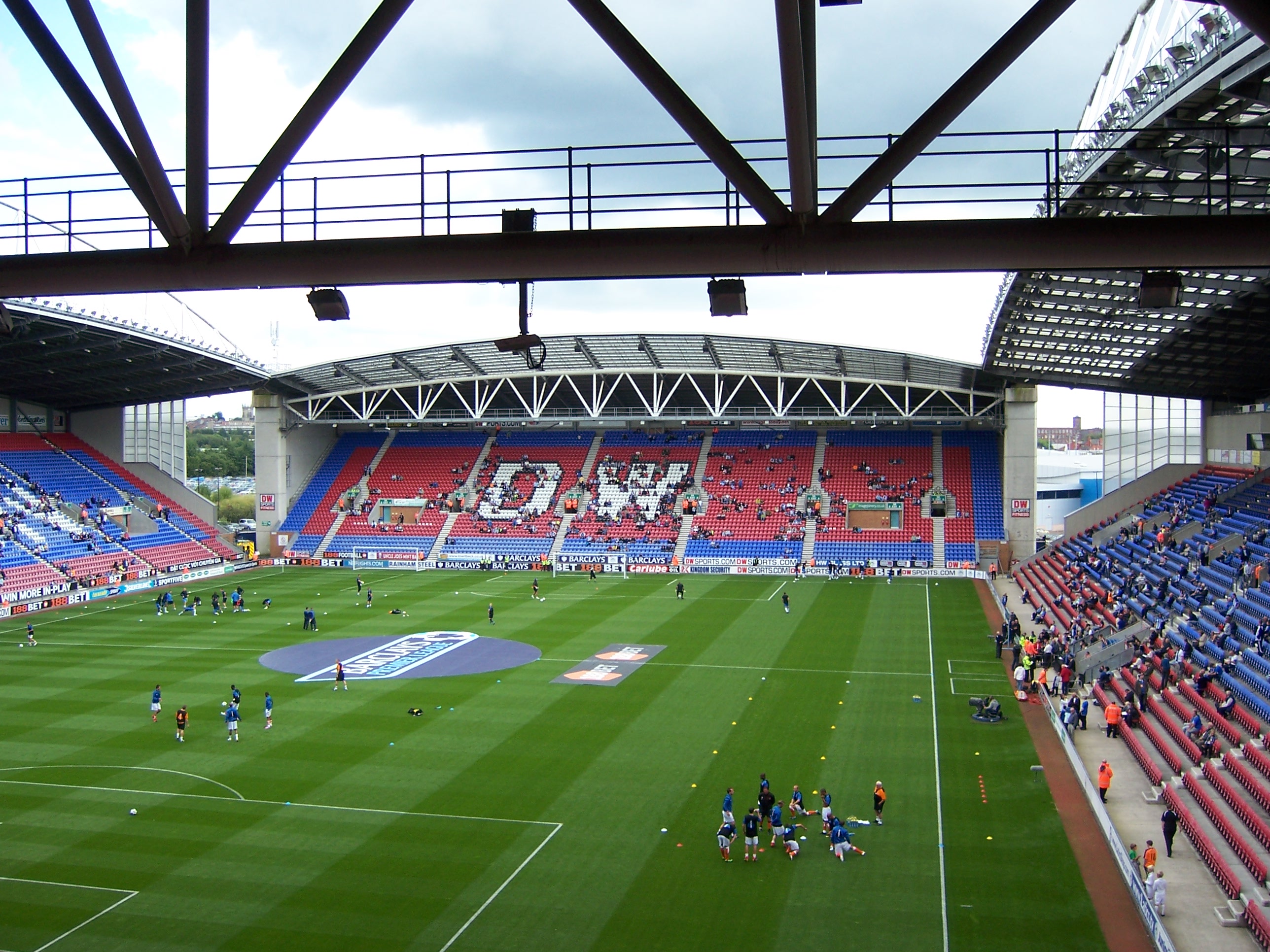
Local businessman Dave Whelan bought the club on 27 February 1995 and funded both a new stadium and the climb through the divisions; his Spanish signings Roberto Martínez, Isidro Díaz and Jesús Seba became known as the "Three Amigos". The Third Division title was won in 1996–97, with Graeme Jones scoring a club-record 31 league goals, the Football League Trophy followed in 1999, and the club moved into its new 25,138-seat stadium that August. Under Paul Jewell, appointed in 2001, Wigan won the Second Division with 100 points in 2002–03, narrowly missed the play-offs in their first season in the second tier, then finished Championship runners-up in 2004–05, reaching the Premier League a decade after Whelan's takeover.
Premier League Years and FA Cup Glory (2005–2013)

A stunning first season — second in the table in November, a League Cup final against Manchester United reached by beating Arsenal on away goals in the semi-final, and a tenth-place finish, still the club's highest — set the tone for eight years of top-flight survival under Jewell, Steve Bruce and Roberto Martínez, built on famous wins over the leading clubs and great escapes on the final day. Hugo Rodallega's 24 Premier League goals are a club record for the competition. The era peaked and ended in May 2013: substitute Ben Watson's injury-time header from a Shaun Maloney corner beat Manchester City 1–0 at Wembley to win the FA Cup, the club's first major trophy — and three days later a defeat at Arsenal relegated Wigan, making them the first club ever to win the FA Cup and go down in the same season.
Europe, Yo-Yo Years and the End of the Whelan Era (2013–2020)

The FA Cup win brought a Europa League group campaign in 2013–14 — the club's only European season — and another FA Cup semi-final in 2014, lost to Arsenal on penalties after a famous quarter-final win at Manchester City. The 2013 Community Shield was also lost to Manchester United. But the slide continued: relegated to League One in 2015, champions in 2016 under Gary Caldwell, relegated again in 2017 and champions again in 2018 under Paul Cook — the season of another famous FA Cup win over Manchester City. Whelan resigned as chairman in 2015 and the family sold the club to the Hong Kong-based International Entertainment Corporation in November 2018, ending 23 years of Whelan ownership. Within two years the club had passed to the Next Leader Fund and, on 1 July 2020, into administration; a twelve-point deduction relegated Wigan from the Championship despite a club-record 8–0 league win over Hull City that month.
Administration Aftermath and the Danson Rebuild (2020–present)
A Bahrain-backed consortium, Phoenix 2021 Ltd, completed a takeover in March 2021, and Wigan won a fourth League One title in 2021–22 under Leam Richardson. But the ownership collapsed into wage failures, three separate points deductions across 2023 — the club started 2023–24 on minus eight points — and an HMRC winding-up petition. On 14 June 2023 Wigan-born billionaire Mike Danson bought the club and immediately paid all creditors, securing its future. Wigan re-established themselves in League One under Shaun Maloney and then Ryan Lowe; after Lowe was dismissed in February 2026, the club turned back to Gary Caldwell — its FA Cup-winning captain of 2013, who had also managed Wigan to the League One title in 2015–16 — appointing him head coach on 16 February 2026.
Honours
| Trophy | Titles | Years |
|---|---|---|
| League title (Premier League) | 0 | Never won — best finish: 10th, 2005–06 |
| FA Cup | 1 | 2012–13 (semi-finalists 2013–14) |
| League Cup | 0 | Never won — runners-up 2005–06 |
| UEFA Europa League | 0 | Group stage 2013–14 — the club's only European campaign |
| Second Division / League One (third tier) | 4 | 2002–03, 2015–16, 2017–18, 2021–22 |
| Third Division (fourth tier) | 1 | 1996–97 |
| Football League Trophy | 2 | 1984–85, 1998–99 |
| Northern Premier League | 2 | 1970–71, 1974–75 |
Timeline
- 1932 — Wigan Athletic are formed after the winding-up of Wigan Borough, and play their first match on 27 August against Port Vale Reserves at Springfield Park.
- 1953 — A crowd of 27,526 watches the FA Cup tie against Hereford United at Springfield Park — a record for a match between two non-League clubs and still the club's record attendance.
- 1973 — Wigan play at Wembley for the first time, losing the FA Trophy final 2–1 to Scarborough.
- 1978 — After 34 failed applications, Wigan are elected to the Football League on 2 June, beating Southport 29–20 in a re-vote to take their Fourth Division place.
- 1985 — The Latics win their first Football League silverware, the Associate Members' Cup (Freight Rover Trophy), at Wembley under Bryan Hamilton.
- 1995 — Dave Whelan buys the club on 27 February and begins funding the climb to the Premier League and a new stadium.
- 1997 — Third Division champions on the final day of the season, with Graeme Jones scoring a club-record 31 league goals.
- 2005 — Championship runners-up under Paul Jewell: Wigan are promoted to the Premier League for the first time, ten years after Whelan's takeover.
- 2006 — Wigan reach their first major cup final, losing the League Cup final 4–0 to Manchester United in Cardiff, and finish 10th in their debut Premier League season.
- 2013 — FA Cup winners: Ben Watson's injury-time header beats Manchester City 1–0 at Wembley on 11 May; relegated from the Premier League three days later, Wigan become the first club to win the FA Cup and go down in the same season, then play in the Europa League.
- 2020 — Weeks after a change of ownership, the club enters administration on 1 July; a 12-point deduction relegates Wigan from the Championship.
- 2023 — After further points deductions and a winding-up petition, Wigan-born billionaire Mike Danson buys the club on 14 June and pays all creditors, securing its future.
References
- Wikipedia — "Wigan Athletic F.C.", "Brick Community Stadium" and "List of Wigan Athletic F.C. records and statistics".
- Wigan Athletic F.C. (wiganathletic.com) — club statements, including "Gary Caldwell appointed Wigan Athletic Head Coach!" (16 February 2026).
- BBC Sport — administration and takeover coverage (2018–2023); Reuters and The Guardian — Mike Danson's acquisition (June 2023).
- Steve's Football Stats — Wigan Athletic club record; Football Ground Guide — Brick Community Stadium.
- Wikimedia Commons — file pages for the photographs used.
Image source: Wikimedia Commons.


